
The 3 Golden Pillars & Guiding Tenets
Pehle Pangat, Phir Sangat
Universal equality in dining on the floor before spiritual audience, observed by all including Emperor Akbar.
Womens Liberation & Social Reform
Abolished Sati and Purdah, banned female infanticide, encouraged widow remarriage, and appointed women preachers (Piris).
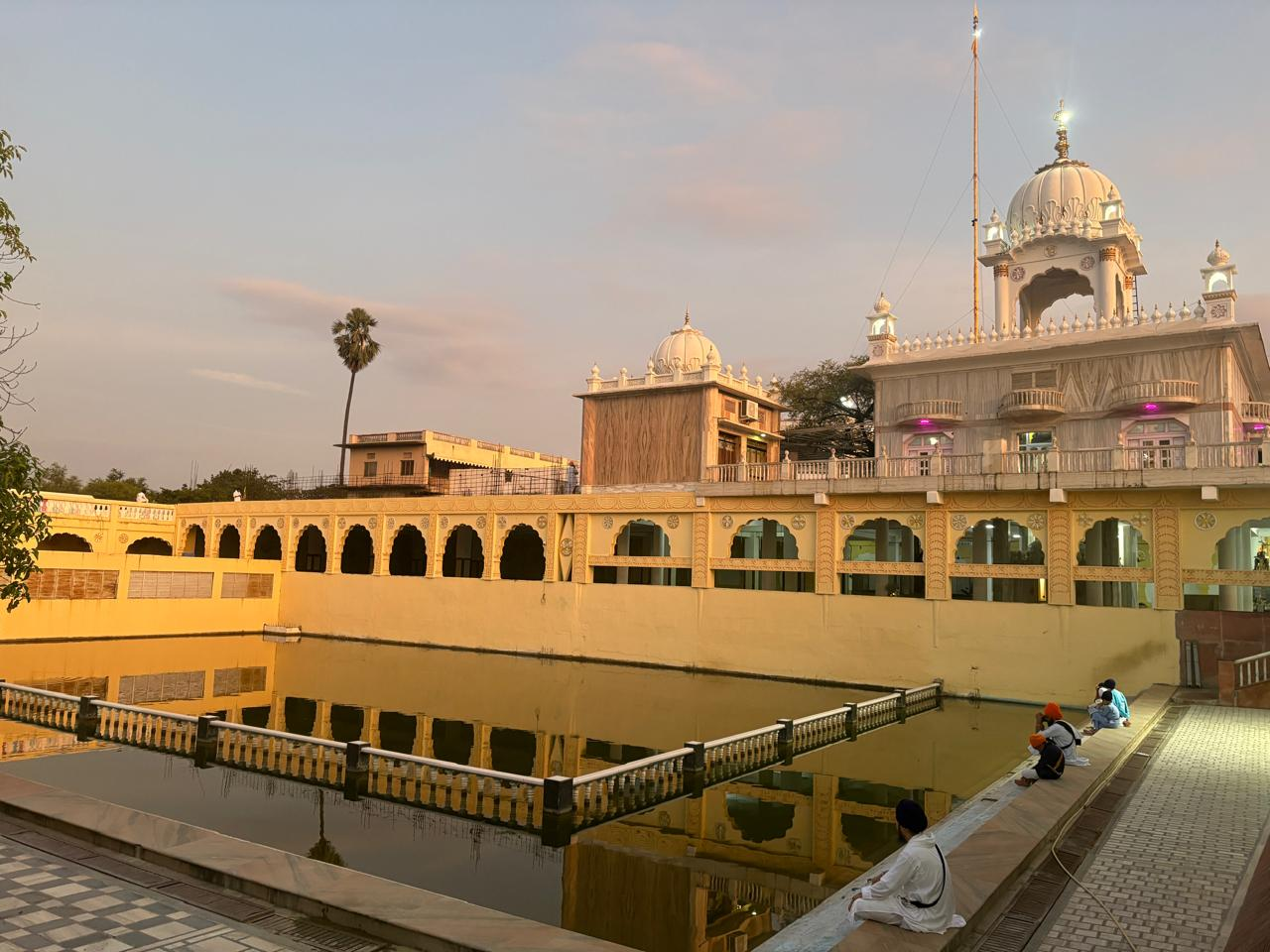
22 Manjis, Baoli Sahib & Anand Sahib
Established 22 administrative zones, constructed Goindwal Baoli with 84 steps, and composed the immortal Anand Sahib.
Complete Historical Chronicle
1. Sacred Birth & Early Life
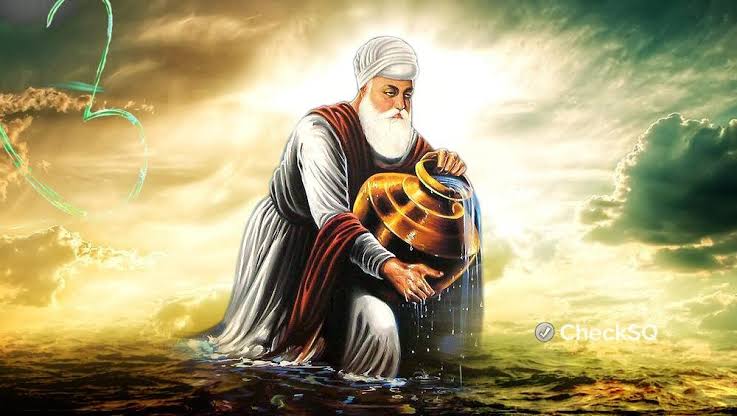
Guru Amar Das Ji, the third Sikh Guru (Nanak III), was born on Sunday, 23 May 1479 (also referenced in Bikrami calculations as 5 May 1479) at village Basarke near Amritsar, Punjab. He was the eldest son of Sri Tej Bhan Ji (a farmer and trader) and Mata Lachmi Ji (also known as Mata Bakht). He had three brothers: Ishar Das (whose son was the revered scholar and scribe Bhai Gurdas Ji), Khem Rai, and Manak Chand. Guru Amar Das Ji married Mata Mansa Devi Ji and they had four children: two sons, Bhai Mohan Ji and Bhai Mohri Ji, and two daughters, Bibi Dani Ji and Bibi Bhani Ji. Bibi Bhani Ji later married Bhai Jetha Ji, who became the Fourth Sikh Guru, Guru Ram Das Ji.
2. Spiritual Inquiries & Rejecting Dogma
Before embracing Sikhi, Bhai Amar Das Ji was a devout Vaishnavite Hindu who spent much of his early and middle life performing religious pilgrimages and fasts with sincere dedication. For over twenty years, he traveled on annual pilgrimages to Haridwar and the sacred River Ganges searching for spiritual truth. Yet, despite his religious devotion, he felt that his inner spiritual quest remained incomplete without a true spiritual preceptor (Satguru).
3. Householder Life & Divine Awakening
The decisive turning point occurred when Bhai Amar Das Ji was 61 years old. While visiting his brother's nearby house, he heard the sublime recitation of Guru Nanak Dev Ji's hymns by his niece-in-law, Bibi Amro Ji (daughter of the Second Guru, Guru Angad Dev Ji, married to Bhai Jasso Ji, son of Bhai Manak Chand). Deeply enchanted and spiritually moved by the divine Shabads, he immediately accompanied Bibi Amro Ji to Khadur Sahib in 1539 to meet Sri Guru Angad Dev Ji. Upon meeting Guru Angad Dev Ji, Bhai Amar Das Ji surrendered himself wholeheartedly to the Guru's lotus feet and adopted Guru Angad as his spiritual master.
4. Sacred Journeys & Epochal Missions
In March/April 1552, at the age of 73, Sri Guru Angad Dev Ji appointed Guru Amar Das Ji as the Third Nanak. When Datu, Guru Angad's jealous son, came to Goindwal and kicked the aged Guru off his seat, Guru Amar Das Ji demonstrated unparalleled humility: he gently caressed Datu's foot, saying, "I am old and my bones have grown hard; I fear they have hurt your tender foot." Guru Ji then quietly retired to his native village of Basarke to meditate in solitude in a closed room with a note: "He who opens this door is no Sikh of mine, nor am I his Guru." Baba Buddha Ji and the Sangat reached the house and, honoring the Guru's words, cut a hole through the back wall (now Gurdwara Sanh Sahib) to entreat the Guru to return and guide the Panth.
5. Establishing Holy Centers & Guru Ka Langar
Guru Amar Das Ji established his headquarters at Goindwal Sahib on the banks of River Beas and systematically organized the Sikh Panth: 1. "Pehle Pangat, Phir Sangat": Mandated that all visitors of any caste, creed, or royal status must first eat together sitting on the floor in Langar before meeting the Guru. When Mughal Emperor Akbar visited Goindwal, he too sat on the floor as a commoner and ate coarse rice in Langar. Deeply impressed, Akbar offered royal land for Langar (respectfully declined by Guru Ji) and, at Guru Ji's persuasion, abolished the pilgrim toll tax for non-Muslims. 2. The 22 Manjis & Piri System: To manage the rapidly growing Sikh community across India, Guru Ji divided the territory into 22 administrative preaching dioceses called Manjis, appointing devout Sikhs (such as Bhai Manak Chand, Bhai Gangu Shah, Bhai Paro, Sawan Mal, Bhai Mai Das, Bibi Sachan Sach, etc.) and instituted the Piri system for women leaders (such as Mai Bhago and Mai Sewan). 3. Social Equality & Women's Rights: Strictly prohibited Sati (burning widows) and Purdah (veiling face — famously refusing to meet the Rani of Haripur until she removed her veil). Encouraged widow remarriage and condemned female infanticide. 4. Baoli Sahib at Goindwal: Constructed the holy Baoli with 84 steps, creating the first sovereign Sikh pilgrimage center. 5. Reverence for Life: Taught that the human body is the embodiment of God's light — to be protected for noble spiritual purposes and submitted to God's Will, not recklessly destroyed.
6. Succession & Merging with the Divine Light
Guru Amar Das Ji deputed his nephew Bhai Gurdas Ji to Agra to propagate Sikhi, giving the daily spiritual routine of Nitnem and Naam Simran for Sikhs. Passing over his own sons, Bhai Mohan and Bhai Mohri, Guru Amar Das Ji selected his diligent and pious son-in-law, Bhai Jetha Ji (Guru Ram Das Ji), based purely on spiritual merit, selfless service, and understanding of Sikh principles. Guru Amar Das Ji merged into the Eternal Divine Light at the age of 95 on Thursday, 16 September 1574 (Bhadon Sudi 14th, Samvat 1631) at Goindwal Sahib, bequeathing the responsibility of Guruship to Fourth Nanak, Guru Ram Das Ji.
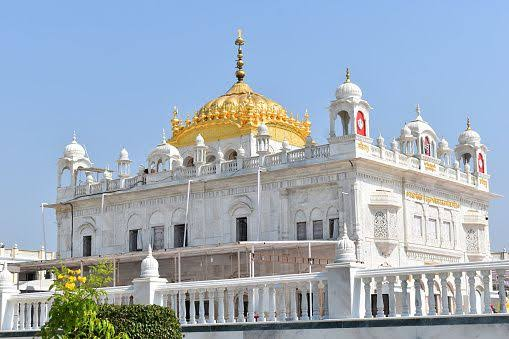
Eternal Legacy & Sacred Historical Shrines
Guru Amar Das Ji contributed 907 revelatory hymns across 17 Ragas to Sri Guru Granth Sahib Ji, including the immortal prayer "Anand Sahib" (Song of Divine Bliss in Ramkali Raga), recited daily in Nitnem and at every Sikh occasion. His legacy rests on five foundational pillars: 1. Social Equality — absolute eradication of caste through universal Langar 2. Women's Liberation — abolished Sati, Purdah, female infanticide; championed widow remarriage 3. 22 Manjis & Piris — organized institutional administration and missionary leadership 4. Goindwal Baoli Sahib — established the first sovereign Sikh center of pilgrimage 5. Anand Sahib & Gurbani — 907 hymns enshrining eternal peace and Divine bliss Historical Gurdwaras: Gurdwara Janam Asthan (Basarke Gillan), Gurdwara Baoli Sahib (Goindwal), Gurdwara Sanh Sahib (Basarke), Gurdwara Chaubara Sahib (Goindwal).